






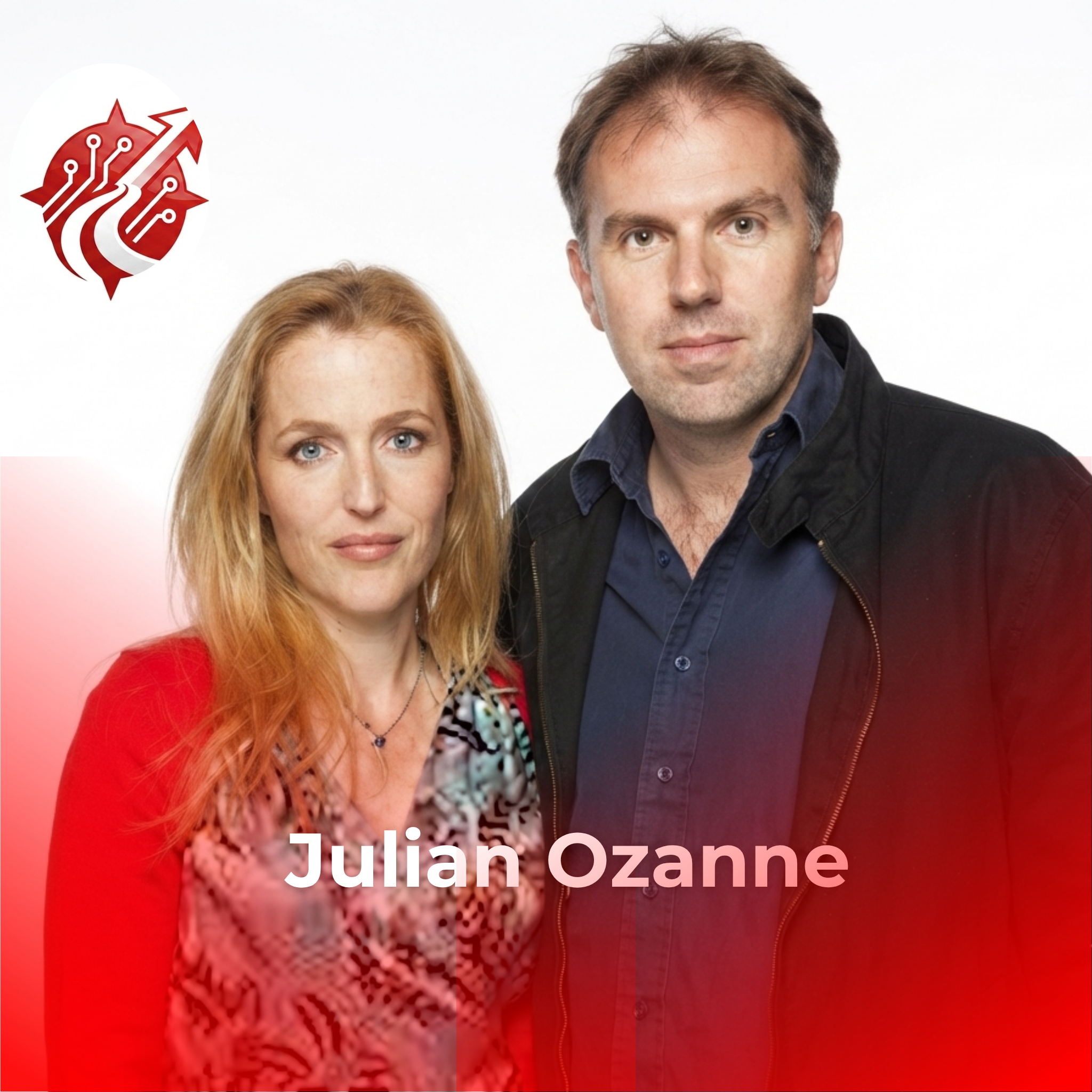
Julian Ozanne is a British–Kenyan journalist, documentary filmmaker, and former foreign correspondent whose career spans international reporting and film production. While he is not a mainstream celebrity, his name often appears in media discussions due to his professional background and his past marriage to actress Gillian Anderson. Beyond public curiosity, Ozanne’s work sits in the quieter but important space of journalism and documentary storytelling, where global politics, culture, and biography intersect.
His career reflects a transition that many journalists make over time, moving from field reporting into long-form visual storytelling. This shift allowed him to explore subjects in greater depth, especially through documentaries focused on cultural figures and international themes. Although he has maintained a low profile in recent years, his earlier work continues to define his professional identity.
Early life and background
Julian Ozanne was born in Kenya in 1965 and spent his early years in East Africa before later relocating to the United Kingdom. Growing up between regions shaped by different political and cultural environments influenced his global outlook. This background is often reflected in the kind of subjects he later chose to report on and produce.
He pursued higher education in the United Kingdom, with some reports suggesting studies related to economics, although detailed academic records are not widely publicized. What is more consistently noted is his early interest in international affairs and communication, which eventually guided him toward journalism. His multicultural upbringing gave him both familiarity with African contexts and access to European media networks, a combination that later supported his reporting career.
Julian Ozanne Journalism career and international reporting
Ozanne began his professional path as a journalist working in international news environments. He developed experience as a foreign correspondent, reporting on political and social developments across different regions. His work often involved field reporting, where accuracy and on-the-ground observation were essential.
During this stage of his career, he contributed to coverage of global issues with a particular focus on African political and economic affairs. Journalism in this field requires not only reporting skills but also the ability to interpret complex regional dynamics, something Ozanne was repeatedly associated with in professional descriptions of his work.
Over time, his work expanded beyond traditional journalism formats. Like many correspondents who spend years in fast-moving news environments, he began shifting toward longer narrative formats. This transition marked a turning point in his career, as he moved from daily reporting into documentary production, where stories could be developed with more time, context, and creative structure.
Julian Ozanne Transition into documentary filmmaking
Julian Ozanne’s move into documentary filmmaking allowed him to combine investigative journalism with visual storytelling. Instead of short-form news reporting, he began working on projects that explored cultural figures, politics, and global identity through film.
His credited work includes documentaries such as This Is Not an Exit: The Fictional World of Bret Easton Ellis, a project centered on the American author, as well as Giorgio Armani: A Man for All Seasons, which focused on the life and influence of the Italian fashion designer. These productions reflect a strong interest in personality-driven narratives and cultural commentary.
He also worked on other film and television documentary projects, often in production or directing roles rather than on-screen appearances. This behind-the-scenes position is common in documentary filmmaking, where much of the work is focused on research, editing, and structuring narrative flow rather than public visibility.
While his filmography is not extensive compared to full-time directors in the industry, the projects he worked on demonstrate a consistent focus on biography and cultural storytelling. His background in journalism clearly influenced his approach, emphasizing factual grounding and structured investigation within his documentaries.
Julian Ozanne Public attention and marriage to Gillian Anderson
Julian Ozanne became more widely known to the general public through his relationship with actress Gillian Anderson. The couple met in the early 2000s and developed a relationship that attracted media attention due to Anderson’s international fame from her role in The X-Files.
They were married in December 2004 in a private ceremony held on Lamu Island in Kenya. The setting reflected Ozanne’s personal connection to East Africa, where he was born and spent part of his early life. The wedding was relatively private compared to typical celebrity events, with limited media access.
However, the marriage was short-lived. The couple separated in 2006 and finalized their divorce in 2007. Publicly available information suggests the separation was amicable, with both individuals choosing to move forward privately without extensive media commentary. They did not have children together.
Although this relationship brought Ozanne more public visibility, it did not define his professional work. His identity remained largely tied to journalism and documentary production rather than entertainment or celebrity culture.
Julian Ozanne Later life and current profile
After the mid-2000s, Julian Ozanne gradually stepped away from public-facing media attention. Unlike some figures who remain active in entertainment or journalism publicity circuits, he chose a more private lifestyle. As a result, verified information about his recent professional projects is limited.
Some references suggest continued involvement in media or consulting work, but there are few widely documented credits in recent years. This makes his current activities less visible compared to his earlier career phase in journalism and documentary filmmaking.
What remains consistent across sources is his reputation as a media professional with experience in both reporting and production. Even without a highly public presence today, his earlier work continues to be referenced in discussions about journalists who successfully transitioned into documentary storytelling.
Conclusion
Julian Ozanne’s career reflects a path shaped by international journalism, cultural storytelling, and selective public visibility. From his early years in Kenya and education in the United Kingdom to his work as a foreign correspondent, he developed a strong foundation in global reporting. His later shift into documentary filmmaking allowed him to expand those skills into longer, more structured narrative formats.
While public interest in his name is often linked to his marriage to Gillian Anderson, his professional identity stands independently within journalism and film production. Over time, he has chosen a quieter presence away from media attention, but his earlier work continues to reflect a career built on observation, reporting, and storytelling.
In a media landscape where visibility often defines recognition, Julian Ozanne represents a different kind of professional trajectory—one focused more on production and content than public image, and more on story development than personal exposure.