








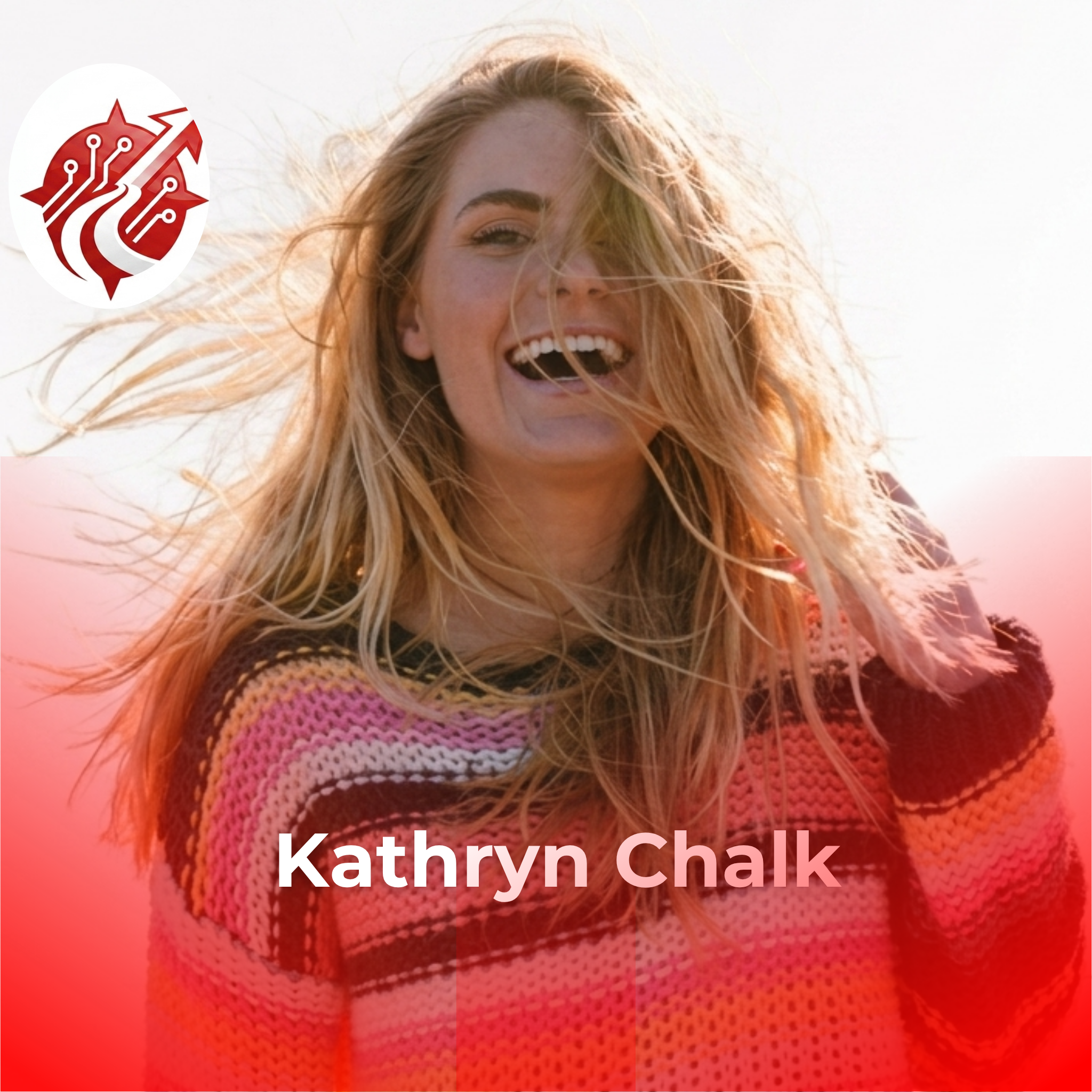
Kathryn Chalk is part of a new generation of UK meteorologists who sit between science and public communication. Her work at the Met Office focuses on turning complex atmospheric data into forecasts that people can actually use in daily life. That might sound routine on paper, but in practice it involves constant interpretation of shifting models, uncertainty ranges, and fast-changing weather systems that affect millions of people.
What makes her role noticeable is not only the forecasting itself, but how those forecasts reach the public. Through broadcast appearances and Met Office communications, she helps translate technical weather information into clear updates that support everyday decisions—from commuting to safety planning during severe conditions.
Early interest and academic foundation
Kathryn Chalk’s path into meteorology began with a strong interest in environmental systems and weather patterns. She studied Environmental Science at the University of East Anglia, a degree that combined physical geography, climate science, and ecological processes. Her time at university included meteorology-focused modules and field-based environmental work, which helped build a practical understanding of how natural systems behave under changing conditions.
Alongside formal study, she also engaged in student-led environmental projects and communication activities. This mix of science and communication would later become central to her professional identity. Rather than focusing only on theory, her academic background already leaned toward how environmental knowledge can be explained and shared with others.
Building experience in environmental forecasting
Before becoming more visible as a public-facing meteorologist, Chalk worked in roles connected to environmental risk and forecasting support. According to professional records, she has experience linked to flood forecasting environments and operational weather services, where meteorological data is directly tied to real-world decision-making.
This stage of her career matters because it reflects the practical side of meteorology that most people never see. Flood forecasting, for example, is not about general weather discussion. It involves interpreting rainfall patterns, river responses, and ground saturation levels to estimate potential impacts on communities. The work is detail-heavy and often time-sensitive, with real consequences if predictions are delayed or misunderstood.
That experience helped shape her move into operational meteorology, where accuracy and clarity are equally important.
Role at the UK Met Office
At the Met Office, Kathryn Chalk works as an operational meteorologist, contributing to the production of forecasts and weather guidance used across the UK. The Met Office itself is the country’s national weather service and one of the most scientifically respected forecasting organisations globally.
Her role involves analysing large sets of atmospheric data from models, satellites, and observational networks. That data is then interpreted into forecast outputs that can be used by broadcasters, emergency planners, and the public.
A key part of the job is uncertainty. Weather models do not produce single fixed answers. Instead, they show probabilities and possible scenarios. Meteorologists like Chalk must decide how to communicate those uncertainties without losing clarity. That balance is essential during rapidly changing conditions such as storms, heavy rainfall, or temperature swings.
Weather presentation and public communication
Alongside forecasting work, Kathryn Chalk also contributes to weather presentation and media communication. This includes appearing in forecast segments and supporting broadcast teams with scripts and updates that translate raw meteorological data into everyday language.
Her presentation style is often described as calm and straightforward, focusing on clarity rather than complexity. That approach is important because weather communication is not just informational—it is practical. People rely on it to decide whether to travel, prepare for storms, or adjust daily plans.
Recent broadcast work has included standard UK forecast updates covering changing conditions such as unsettled Atlantic systems, temperature shifts, and regional rainfall patterns. These updates highlight how quickly UK weather can shift within short periods, a challenge meteorologists must constantly track and explain.
Here’s where it gets interesting: weather presenters today are not just “reading forecasts.” They are part of a wider communication chain that includes data scientists, emergency planners, and media organisations, all working to ensure the public receives timely and accurate information.
Why Kathryn Chalk’s role reflects a changing field
Meteorology has changed significantly over the past decade. With more advanced modelling systems and greater public awareness of climate-related risks, the role of meteorologists has expanded beyond prediction into communication and education.
Kathryn Chalk represents this shift. Her work sits in a space where scientific forecasting meets public understanding. That requires more than technical knowledge. It demands judgment—knowing what matters to audiences and how to explain it without oversimplifying or overloading detail.
It also reflects a broader expectation placed on modern weather professionals. The public now expects not only accuracy but context: what the weather means, how long it will last, and what risks it may carry.
Recognition and growing visibility
While Kathryn Chalk is not a celebrity figure, her increasing visibility comes from her role within national forecasting communications. Appearances in Met Office updates and broadcast segments have made her a recognizable voice in UK weather reporting.
Her professional trajectory also reflects a wider trend within meteorology, where skilled operational forecasters increasingly step into public-facing roles. This helps build trust in official forecasts at a time when weather information is widely shared across multiple digital platforms, not all of them reliable.
Frequently Asked Questions
Who is Kathryn Chalk?
Kathryn Chalk is a UK operational meteorologist working with the Met Office, involved in weather forecasting and public communication.
What does Kathryn Chalk do at the Met Office?
She analyses weather data, helps produce forecasts, and contributes to broadcast and media weather updates for public information.
Where did Kathryn Chalk study?
She studied Environmental Science at the University of East Anglia, with a focus on environmental systems and meteorology-related topics.
Is Kathryn Chalk a weather presenter?
Yes, she appears in weather presentation segments in addition to her operational forecasting work.
What is her main area of expertise?
Her expertise lies in operational meteorology, including forecasting, environmental risk awareness, and weather communication.
Why is Kathryn Chalk known publicly?
She is known for her role in UK weather forecasting and her appearances in Met Office-supported media updates.
Conclusion
Kathryn Chalk’s work reflects the modern reality of meteorology, where forecasting is only part of the job. The other part is communication—making sure people understand what the atmosphere is doing and how it affects them in practical terms.
Her background in environmental science and operational forecasting has given her a grounded understanding of both data and impact. That combination is what makes her role increasingly relevant in today’s weather landscape.
As weather systems become more variable and public reliance on accurate forecasts grows, professionals like her are likely to play an even more central role in how information is delivered and understood.